A month ago, I found my daughter crocheting with a kind of holy intensity.
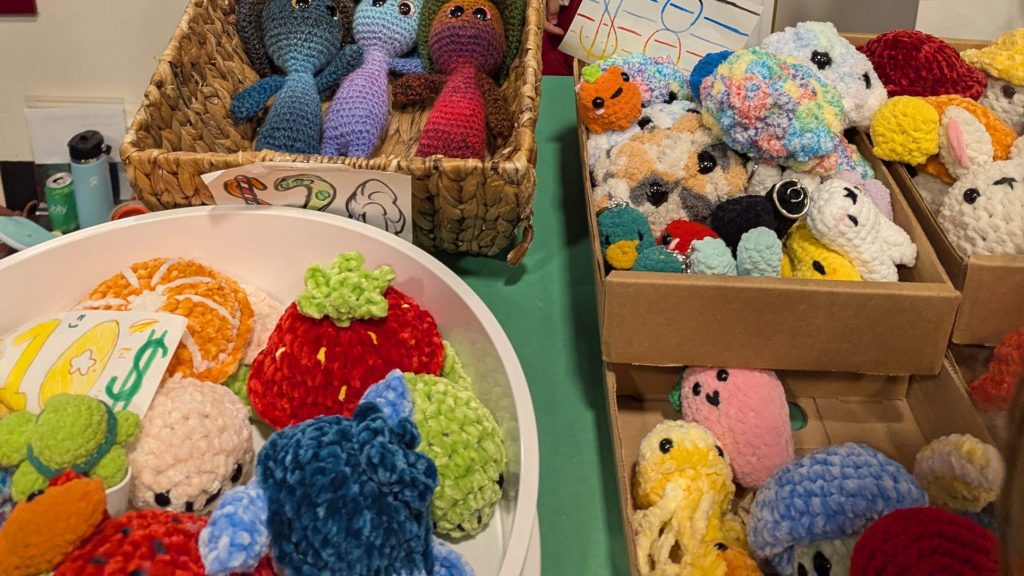
Our local school’s annual craft fair was approaching, and she had a clear goal: make and sell as many small animals and mushrooms as humanly possible. Because she’s homeschooled, time was abundant, and she made good use of it. Eight to ten hours a day, hook in hand, fully absorbed.
At first, I was delighted. This wasn’t passive consumption or scrolling or numbing out. This was focus. Creativity. Commitment. A wholesome, self-directed project. A parent’s dream, right?
And still… the itch.
That familiar parental discomfort crept in whispering, Something’s off. This needs regulating. I told myself she needed help finding balance and that it was my job to step in.
Like most parents, I’m always scanning for imbalance in my kids: too much screen time, not enough movement, too many sweets, too little connection. Our nervous systems are built for this. Until our children’s prefrontal cortex is fully online, we lend them ours. We monitor. We anticipate. We worry. Knowing we have this hardwired vigilance can help us pause long enough to decide whether to act—or simply notice.
On the fourth nearly non-stop crochet day, I checked in with her, not because she seemed unwell, but because I was projecting myself into the future. I imagined the craft fair ending with a surplus of animals and an empty cash box, and more importantly, a broken heart.
I wanted to protect her from the possibility that she might pour her heart into something and not get the outcome she hoped for. I worried she’d decide effort wasn’t worth it. I saw her spirit as fragile, something to be safeguarded by anticipating regret before it had a chance to land.
So I asked her to consider it.
What if she didn’t sell as much as she expected?
She paused. Looked up. And said, plainly,
“Then I’ll be disappointed.”
Oh. Her response shocked me awake. She was so clear, so unburdened by anxiety and future-tripping. This was clearly all me! And I had underestimated her.
Humbled, I realized I was trying to protect her from a deeply human experience. And in doing so, I was quietly handing her my own anxiety about it. I had mistaken discomfort for danger.
Thankfully, I caught myself. I told her how proud I was of her dedication. I reminded her that I’d be right there, ready to celebrate or to sit beside her in disappointment, whichever came.
We say our job as parents is to prepare our kids for the real world. And yet, without realizing it, we often remove the very experiences that build resilience (especially when the stakes are low and support is high). What a gift it is to throw yourself into something, risk not getting what you hoped for, feel the sting, and discover you can recover and choose again.
Overprotection isn’t always loud. Often, it points to an experience we haven’t fully made peace with yet. If you notice discomfort around the emotions your child encounters, welcome to humanity! …AND, you’ve been given a precious invitation to re-parent yourself while gently interrupting inherited patterns of anxiety.
This work is meaningful. It’s also hard to do alone.
So give yourself and your child the gift of support. Find community. Find someone who understands your nervous system as well as your good intentions. And if you want professional guidance as you step into new territory with your family, you’re always welcome to reach out to a parenting coach like me.
Growth asks us to stay present.
Even when we can’t predict the ending.
Take your time, go at your own pace, and remember you’re in good company.